
Your Unique Taxpayer Reference (UTR) number is a 10-digit reference which you’ll usually find on any letters or emails between you and HMRC, as well as in your tax account. You might have more than one – for example, a company UTR and one for your own individual tax records – so make sure that you use the correct one!
What is a UTR number?
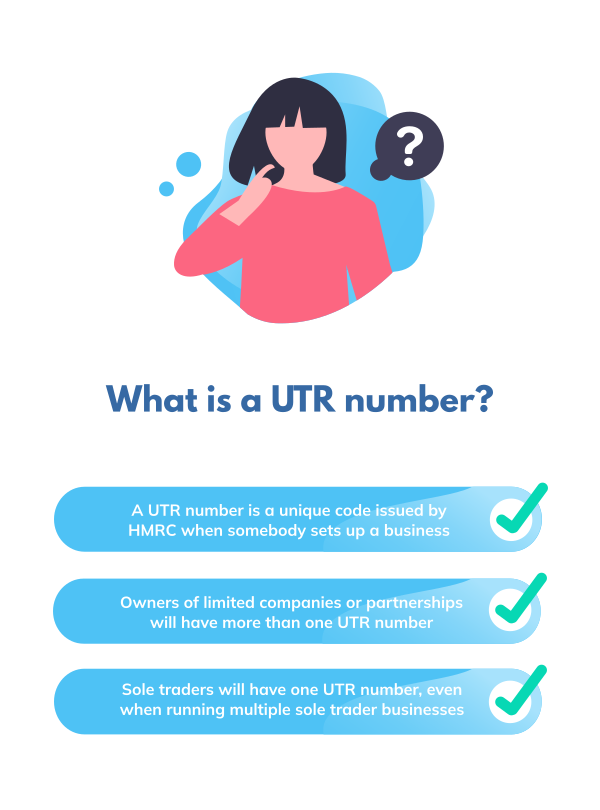
UTR stands for Unique Taxpayer Reference and, like the name suggests, this is a unique code issued by HMRC when someone sets up a business. You might also hear it called a tax reference. HMRC uses unique reference numbers along with your name and date of birth, to help them locate and manage your tax records.
Most businesses will have several tax identification numbers for a variety of reasons to keep track of, covering everything from VAT registration to PAYE, but you might also have more than one UTR depending on what sort of business structure you run.
- A sole trader will have one UTR, even if they run multiple sole trader businesses
- When you set up a limited company you’ll receive a UTR for the business when you register it. If you need to report any personal income that you take from the company then you’ll also need a separate UTR for you as an individual. When the time comes for you to submit a tax return for the company, you might see its UTR referred to as a Corporation Tax Number.
- In a partnership you’ll have a UTR for the partnership itself as an entity, and then a separate one so that you can report your share of the income that the partnership makes.
How do I get a UTR number?
You’ll normally be sent a UTR number when you tell HMRC or Companies House about a new business, such as registering for Self Assessment as a sole trader, incorporating a new company, or as a result of registering another entity (such as a partnership) for Self Assessment.
Some people need to apply for more than one UTR number. For example, if you set up a company and you plan to take dividends from the business:
- You’ll need a UTR for the limited company so you can send a Company Tax Return to report its income, and pay Corporation Tax on any profits. You’ll receive the company UTR when you register with Companies House, along with your Company Registration Number.
- You’ll also need a separate UTR so you can submit Self Assessment tax returns to report the dividend income you receive from the company. Don’t mix them up!
What does a UTR number look like?
- A UTR is normally a 10 digit number, sometimes shown with the letter ‘K’ after it. For example, 1234567891 K
- A company’s UTR number looks a bit different, and usually begins with 3 numbers, then a 10 digit reference number and the letter ‘A’. For example, 123 0123456789 A
What if I can’t find my UTR?
If you can’t find any letters or documents from HMRC with your UTR on, you might be able to find it by signing into your Personal Tax Account. If you still struggle to find it, contact HMRC as soon as possible, especially if you’re getting near to your tax return deadline.
Learn more about our online accounting services for businesses and employers. Call the team on 020 3355 4047, or get an instant online quote.
Want to learn more?
Subscribe to our newsletter to get accounting tips like this right to your inbox